

In the heart of Lagos in Nigeria educators like Odulano Oluseun Modupeola are making a profound impact on the lives of young learners. As a dedicated Chemistry teacher, Odulano has spent the past eight years shaping the minds of students, many of whom juggle their studies with the demands of assisting their families in local markets. In this interview, Odulano shares the challenges, triumphs, and strategies that fuel his passion for teaching and his commitment to fostering global citizenship and sustainable development among his students.
Odulano participated in the 2023-24 AFS Effect+ for the Classroom program, where she regularly highlighted her students’ projects that exemplified active global citizenship. We connected with her to learn more about her school, her students, and her teaching methods.
How long have you been a teacher and what brought you to the profession?
Odulano: I have been a teacher for 8 years now, and I teach Grades 10 -12 Chemistry at Ransome-Kuti Memorial Senior Grammar School, Mushin, Lagos, Nigeria. I feel fulfilled when my students beam with the excitement of being impacted after every class session. And I feel I am fulfilling my purpose when my students apply concepts and learn in creative and practical ways. I always look forward to leaving my students better than when I met them.
What are your students like?
Odulano: The Yoruba are the dominant ethnic group in my school. Other ethnic groups found in my school are Igbo, very few Hausa and students from other countries such as Togo.
The mother-tongue of the environment (Mushin, Lagos State, Nigeria) is the Yoruba language. But the medium of instruction in the classroom is English. Recently, the Lagos State Ministry of Education approved that the mother-tongue be employed as well during the teaching and learning process. This is to improve the performance of students who might be finding it difficult to comprehend and express themselves fluently in the English language. Every Wednesday is dedicated to speaking Yoruba languages only during all activities from the morning assembly till the close of school for the day.
In terms of religion, recognized religious groups, as registered by students, are Christianity and Islam. The Muslim girls are allowed to include a navy-blue hijab, with the school badge attached, in their uniform while the Christian girls are to make use of the school beret caps. The boys, Christian and Muslims, are to put on the school face caps as part of their uniform. Each religious group leads the assembly on alternate days. For instance, the Christian assembly prefect leads on Mondays, Muslim assembly prefect leads on Tuesdays and so on.
The school is located in Mushin, Lagos. Mushin is an area with bustling commercial activities. We have major markets situated in Mushin: the leather market hosting more than 300 shops of varieties of leathers; the Ladipo auto spare parts market, the largest market for buying vehicle parts in Nigeria; Alasalatu, Awolowo, Daleko, Idi-Oro and Ojuwoye food, provisions and grocery markets; Stationery shopping complexes; and Shopping Marts. Hotels, mini bars, clubs and restaurants are in their numbers as well.
A higher percentage of the students’ population have parents working or trading in these markets and organizations. Most of the students get to assist in shading their parents’/guardians’ wares and goods before coming to school in the morning and after school hours, they join their parents in the market/shop till the close of market late in the evening.
These definitely affect the students’ performance as they tend to come late to school, worn out from previous evenings and early morning assistance given to their parents/guardians. For some students, their parents are low income earners, working in private organizations in low-rank jobs such as sanitation workers, earning as low as 18 dollars monthly to fend for a family of four at least. They usually are not able to afford important school materials for their children/wards.
Teaching and learning is usually tasking as teachers tend to devise strategies of motivating and impacting the students academically and morally.
Can you tell us more about your school and how it is structured?
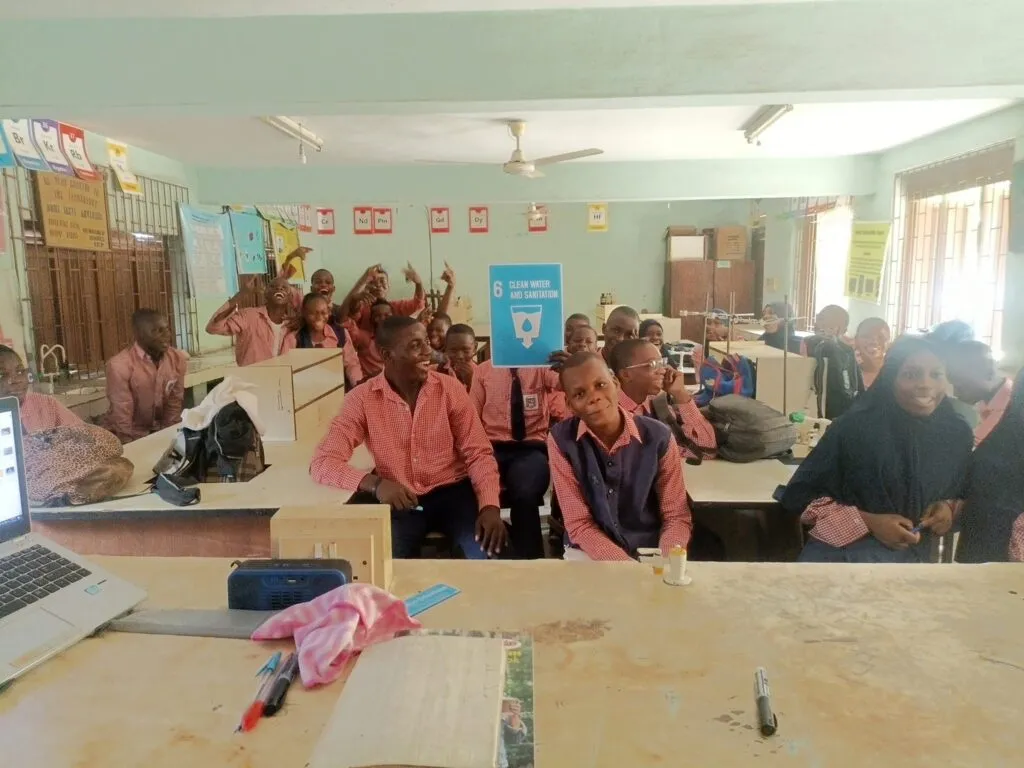
Odulano: My school is a Public school, owned by the Lagos State government in Nigeria. We have close to 1000 students in the school. We have three departments for each grade level of students, the science department, the arts department and the commercial department. In spite of the seemingly disadvantageous conditions and financial situations of the students’ families, they still exhibit determination, dedication, discipline and hardwork in their studies, furthering to the higher institutions of learning and graduating to become positive forces and examples to reckon with in the community.
What is a challenge that you feel many teachers in your area have to face?
Odulano: Many teachers in my area face the challenge of inadequate teaching aids to improve teaching and learning process. Most laboratories in schools have inadequate apparatus and equipment for effective practical activities. Modern technologies such as the laptops and smart screens to project activities to students are absent in schools.
Teacher to students population ratio is also extremely low, with no [electronic] public address system to make it any easier on the teachers; stress from teaching extra subjects and administrative duties due to insufficient numbers of teachers in schools; as well as financial challenges are some of the major issues for educators in my community.
Can you share with us a success story or moment that made you feel valued as an educator?
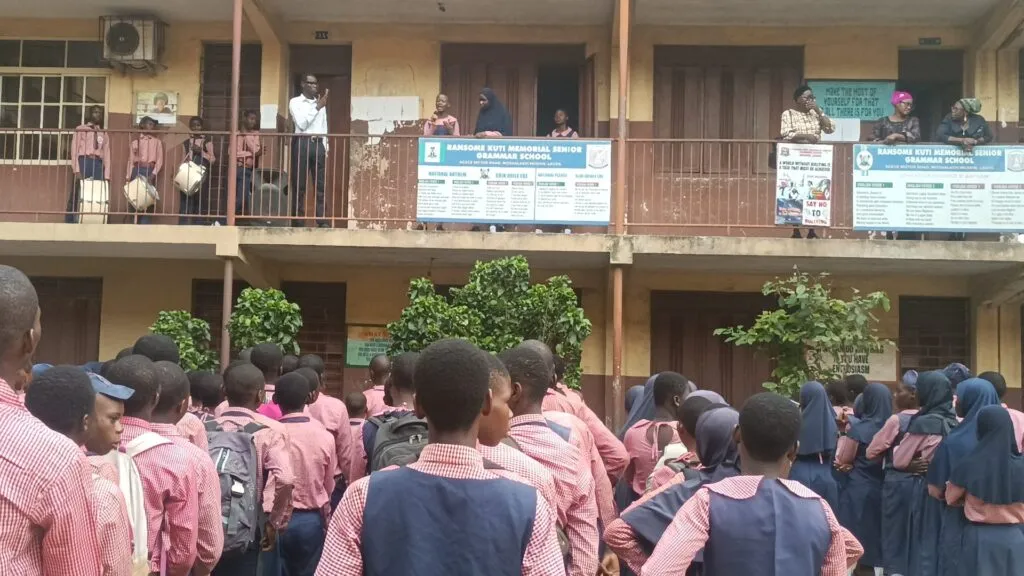
Odulano: I was able to sensitize students on the UN Sustainable Development Goals (SDGs) and the need to take action during a chemistry class while I taught the topic ‘water’. I felt so proud the following week when two of my students stepped forward on the assembly ground before all students and gave a talk on the SDGs and the need for fellow students to take action by sorting waste generated in their classrooms. It was a beautiful moment for me because I wasn’t expecting this and it felt great to see them anchor the sensitization talk with boldness and so much confidence. It was fulfilling to see that a chemistry class could birth a group aimed at being change agents in the positive direction.
Another memorable moment came at the end of an academic year. My classroom students gave me a surprise moment with a gift of a picture frame of me with the words “Best Teacher Ever” inscribed on it. I felt loved and appreciated and it is a memory I still look back upon with a sense of fulfillment.
How have you tried to incorporate Global Citizenship Education (GCED) into your classroom?
Odulano: [Through GCED] I have learned about a variety of different learning styles, so I ensure that every class activity meets every learner in my classroom. I employ the peer teaching, speaking out, assignments and quizzes to provide for the dynamic learners; I combine real life experiences and discussions, provide visual and imaginative activities to cater for the imaginative learners; for the common sense learners, I make provisions for practical sessions during class activities (where materials/apparatus are not available, I play video clips on such practical activities via my laptop aided by a Bluetooth speaker); and for the analytical learners, there is a session of reading out loud and role plays assignments on topics like Elements of the Periodic Table.
In a lesson, these activities are well planned and structured such that no child reels left out at any point in time. And every child learns concepts in their preferred learning style.
How have your students responded to this kind of learning?
Odulano: My students have responded positively to the GCED. They are more confident in their approach to fellow students and teachers in school. They treat one another with respect and admiration irrespective of tribe or religious backgrounds. They engage in volunteering services such as advocating for the SDGs in the school and tutoring their mates.
What is one teaching tool or method you find very effective that you would recommend to other teachers?
Odulano: I would recommend that students give class presentations and adobe sure to give daily assignments.
Some teachers don’t use class presentations because of time restrictions. But when applied strategically, they can be effective for fast coverage of a topic. Class presentations have a way of bringing out the best in students. They have a way of making them take ownership of their learning. They ignite creativity, boost confidence, improve effective communication, prepare them for future jobs and build bonds of friendship amongst them. From imbibing this strategy, a group of Grade 12 students got inspired to create a WhatsApp platform where they teach close to 300 fellow students in science subjects for free in preparation for their external examination (WAEC). They assigned subjects to themselves and days of teaching.
I would also recommend daily assignments with prompt feedback to the students that encourage and motivate them to study daily. The assignments do not have to be lengthy and bulky. But they should be such that would lead them to research from their textbooks, the internet, or their seniors in school.
If you could give one piece of advice to a new teacher starting their career next school year, what would you say?
Odulano: My advice is to find mentors who are getting it right in the teaching profession. Few mentors I admired and understudied include Mrs Adeola Akinsulure, Mrs Adeola Adefemi, and Mr Olalekan Adeeko. Getting a mentor will give you the needed tips and exposure to feel fulfilled as a teacher and also be a great teacher to your students.
Thank you to Odulano for your time in sharing a little about yourself with the AFS Audience! If you would like to connect further with Odulano she has provided the following channels: Email, Facebook, LinkedIn, Instagram, Twitter
Find out more by subscribing to the AFS Global Classroom Newsletter. Sign up now