
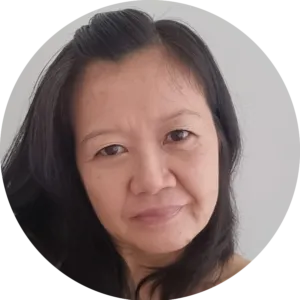
Luciana Terumi Nomura is an experienced English and Portuguese teacher from Guaíra, Brazil, dedicated to shaping the future of her students through education. With a career spanning both private and public institutions, she has worked with students from diverse socio-economic backgrounds, adapting her teaching methods to meet their needs. Passionate about global education, Luciana incorporates Global Citizenship Education (GCED) into her classroom, ensuring that her students develop critical thinking, social-emotional skills, and intercultural awareness. In this interview, she shares insights into her teaching journey, the challenges educators face, and the strategies she employs to inspire and empower the next generation.
AFS: Where and what do you teach?
Luciana: I live in a small town, Guaíra, in the state of São Paulo, Brazil. I work as an English teacher in a private school at Centro Educational Ana Lelis Santana – CEALS, from kindergarten to elementary levels. I worked at ISALS, the Social Institute Ana Lelis Santana, a project that assists students who cannot afford to attend a private school. The institute offers music and choir classes from renowned teachers from different areas. Many of our students have successfully gained admission to state and federal universities. In the upcoming year, I will be attending ETEC Technical Public School and probably FATEC (Public College). My teaching responsibilities include both Portuguese and English. I have two years of experience as a substitute teacher in public schools; where I worked on a temporary contract basis at ETEC and Federal Institute in Barretos, teaching technical courses at high schools. It was a fulfilling experience to adapt teaching materials according to the specific courses. ETEC and the Federal Institute are full-day schools where students receive all their meals, including breakfast, lunch, and snacks. The menu is prepared by a nutritionist in the school’s kitchen.
AFS: How long have you been a teacher and what brought you to the profession?
Luciana: As a teacher, I believe my role is to inspire and impact students, helping them to succeed and shaping their future. I graduated in Portuguese and English in 1995, and I have been teaching English ever since. I spent around 18 years working in a Language School, where I gained valuable experience and practical ideas that has helped me adapt strategies for teaching in both private and public schools. Working at a technical high school, where I can make use of my second degree in Business Administration and my expertise in teaching instrumental English.
AFS: What are your students like?
Luciana: Students at the private school mostly speak Portuguese, are mostly Catholic, and come from a high to medium socio-economic background. They have a well-supported and enriched background, which can be a great advantage in their education. In contrast, public schools differ regarding socio-economic background, as most parents have not completed their education, leading to fewer opportunities.
AFS: Can you tell us more about your school?
Luciana: In the private school, there are approximately 1000 students from kindergarten to high school. The Public Technical school at ETEC has around 220 students, and the Federal Institute has about 800 students. The private school provides all the necessary support for the students, as required by their parents. The public schools lack emotional support to instill belief in a better future. The purpose of these schools is to prepare students for the world and to make them aware that they can become successful professionals.
AFS: What is a challenge that you feel many teachers in your area have to face?
Luciana: In a private school, teachers face a mix of unique challenges and benefits. The smaller class sizes, with 20 or fewer students in each classroom, allow for more individualized attention. There is also an assistant available to provide support, and some students with special needs have a dedicated assistant to guide them during activities. Parents are more involved in the school, but at times, this involvement can be overwhelming for teachers. There is constant pressure to maintain high academic standards and uphold the school’s reputation. The students come from affluent backgrounds and have ample opportunities for further education. On the other hand, at ETEC and Federal Institute, there are around 40 students in a classroom. There is technology support in all the classrooms. Family support and low self-esteem pose significant challenges for some students, as they feel discouraged about their prospects due to financial constraints. Overcoming these obstacles is crucial to help these students envision a brighter future.
AFS: Can you share with us a success story or moment that made you feel valued as an Educator?
Luciana: There are many amazing memories associated with it, but the most rewarding one was when I was able to connect with a young girl on the autism spectrum. She was 4 years old, nonverbal, and sometimes displayed aggressive behavior. Through the use of videos, songs, and games, she began to learn about colors, numbers and started communicating.
AFS: How have you tried to incorporate Global Citizenship Education (GCED) into your classroom?
Luciana: Incorporating Global Citizenship Education (GCED) into the classroom can be incredibly enriching for students. In Brazil there is the National Common Curricular Base.
The BNCC introduces several essential changes to the education system in Brazil. It focuses on interdisciplinary learning, the development of socio-emotional skills, and a shift towards competency-based education. By emphasizing these aspects, the BNCC aims to provide students with a more holistic and well-rounded education that will better prepare them for success in the modern world. For educators, aligning assessments with the BNCC standards means incorporating a wide range of assessments that measure not only academic knowledge but also skills and competencies outlined in the standards. This could include traditional exams, project-based assessments, portfolios, and performance tasks. By using a combination of assessments, educators can ensure that they effectively evaluate students’ progress toward meeting the BNCC standards. For example, in a science class, assessments could include traditional tests to measure content knowledge, as well as projects or experiments that assess skills such as critical thinking and problem-solving. In a language arts class, assessments could include written essays to evaluate writing proficiency, as well as oral presentations to assess communication skills. Overall, aligning assessments with the BNCC standards will lead to significant improvements in the education that young students receive in Brazilian schools. The BNCC provides a more comprehensive and relevant curriculum that better prepares students for the challenges of the future.
AFS: How have your students responded to this kind of learning? (GCED)
Luciana: They had the opportunity to learn more about intercultural cultures, social-emotional, collaborative projects, critical thinking, and problem-solving. These approaches not only align with the BNCC but also help students develop a sense of global citizenship, preparing them to be thoughtful, informed, and active participants in an interconnected world.
AFS: What is one teaching tool or method you find very effective that you would recommend to other teachers?
Luciana: Participating in courses such as AFS, Brite, Relo Teaching for Success, and various webinars from Cambridge, British Council, Oxford, and Macmillan has provided me with valuable insights to enhance my ongoing learning development. Creating a positive environment is essential for engaging students in the classroom. I use images to encourage the use of English exclusively in my teaching. Gamification is an interactive approach through which students learn collaboration and social skills. It motivates them to participate actively and reinforces their learning process.