
“One of the educational steps that equipped me with knowledge and tools for education is AFS. It helped me become globally competent and understand cultural theories, applying them while teaching. The most important aspect was that it helped me build self-awareness about myself, which also aided in helping students build their own identity.“—shares Rawan Saqfalhett, alumna of the AFS Effect+ for the Classroom program, who continuously pursues ways to improve and expand her teaching methods. Rawan’s journey of resilience and dedication to education is truly inspiring. She has graciously shared her story with this community of Global Educators:
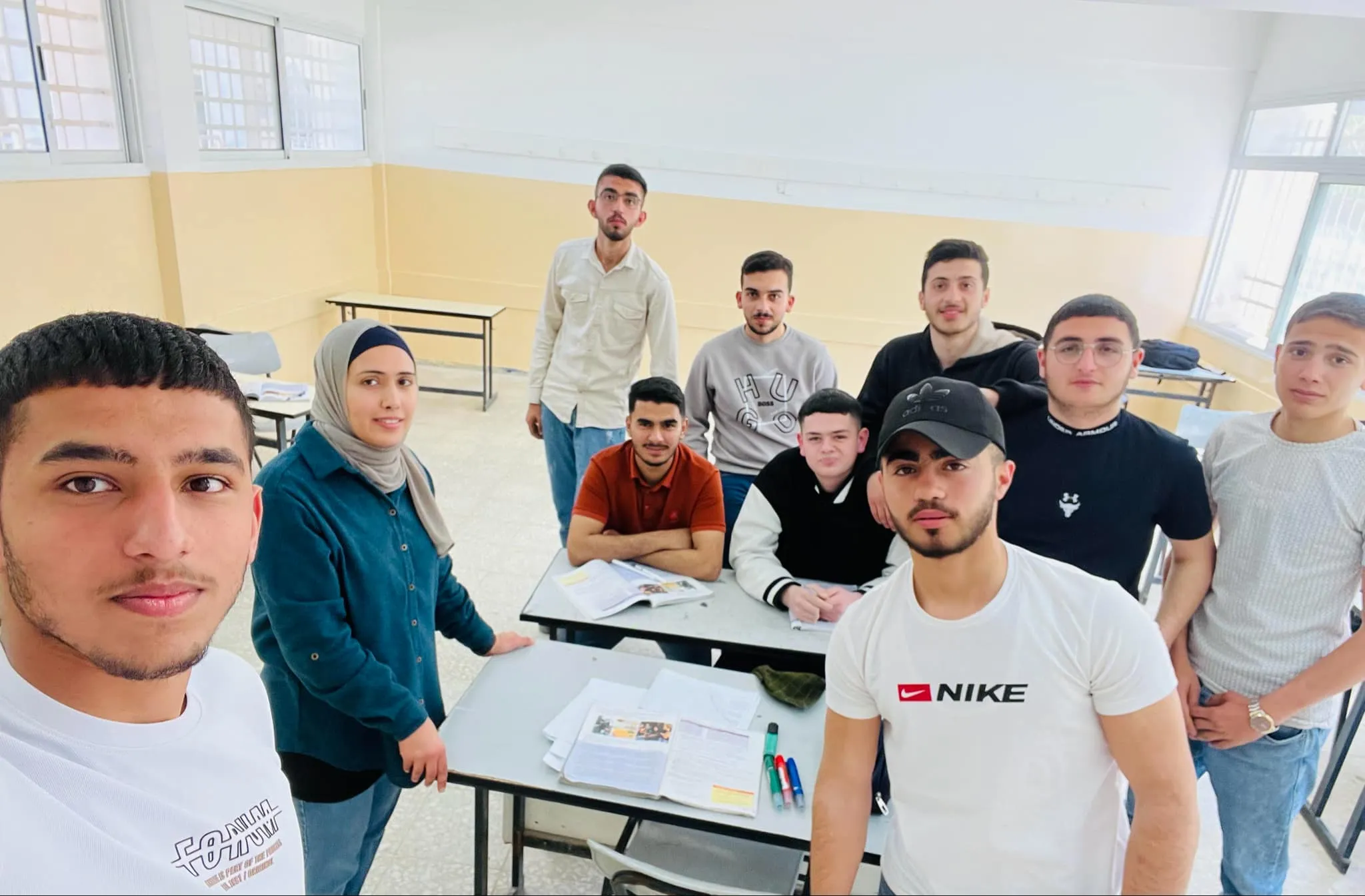
In the early hours of a typical morning in the West Bank, as the first light of dawn casts a glow over the landscape, I prepare for the day ahead. Breakfast is quick—a cup of coffee in hand, test papers checked and tucked under my arm as I head towards the car. It’s a routine interrupted by the pings of my phone with notifications that might signal a sudden shift to online classes due to the ever-present instability in the region. This is the reality of a Palestinian teacher’s daily life.
My journey as an educator in such a volatile environment has taught me the indispensable skill of flexibility. The unstable political climate not only disrupts our schedules but deeply impacts our students, who look to us as models of strength and adaptability. It is not just about teaching; it’s about being a constant in their lives when little else is.
Teaching extends beyond the confines of the local school. In the evenings, I teach nearly 450 students who are eager to learn English in virtual schools for displaced students as part of the Ministry of Education’s program. Despite the challenges—slow internet, and the sheer volume of students—these sessions are a testament to the power of education to bridge gaps.
At my school, I strive to bring the world to students who are geographically and politically isolated. Through initiatives like the First Cultural Village in Jericho which was the region’s inaugural event of its kind where students researched different countries and their cultures and then represented them at a large social event. It was their first time to learn about these cultures because they have not travelled before. Another event, Eco-day, facilitated students engaging with international cultures and sustainability concepts. These projects not only broaden their horizons but also integrate them into a global community concerned with shared issues like environmental sustainability.
Amid these educational endeavors, I also shoulder the role of a journalist educator. Using my skills in mobile journalism, I document and share the vibrant, poignant narratives of my students—turning our classroom into a window to the world. These stories of perseverance and achievement reach beyond local confines, connecting with a global audience and reinforcing the students’ sense of belonging to a larger community.
The harsh realities of home, marked by financial strains and frequent political disruptions, make school a sanctuary for many. As an educator, I find solace in providing a space where students can temporarily escape these adversities. The classroom becomes a place of safety and stability.
Every time I step into the school, I remind myself of my mantra: “Where there is a will, there is a way.” These words have guided me through unexpected journeys, opening doors to opportunities I never imagined, such as the CrossCulture Programme and the Study of the U.S. Institutes for Secondary Educators. These experiences have broadened my perspective and deepened my commitment to sustainable development goals. More importantly, they have shaped my lesson plans and teaching methods, allowing me to bring global insights into my classroom.
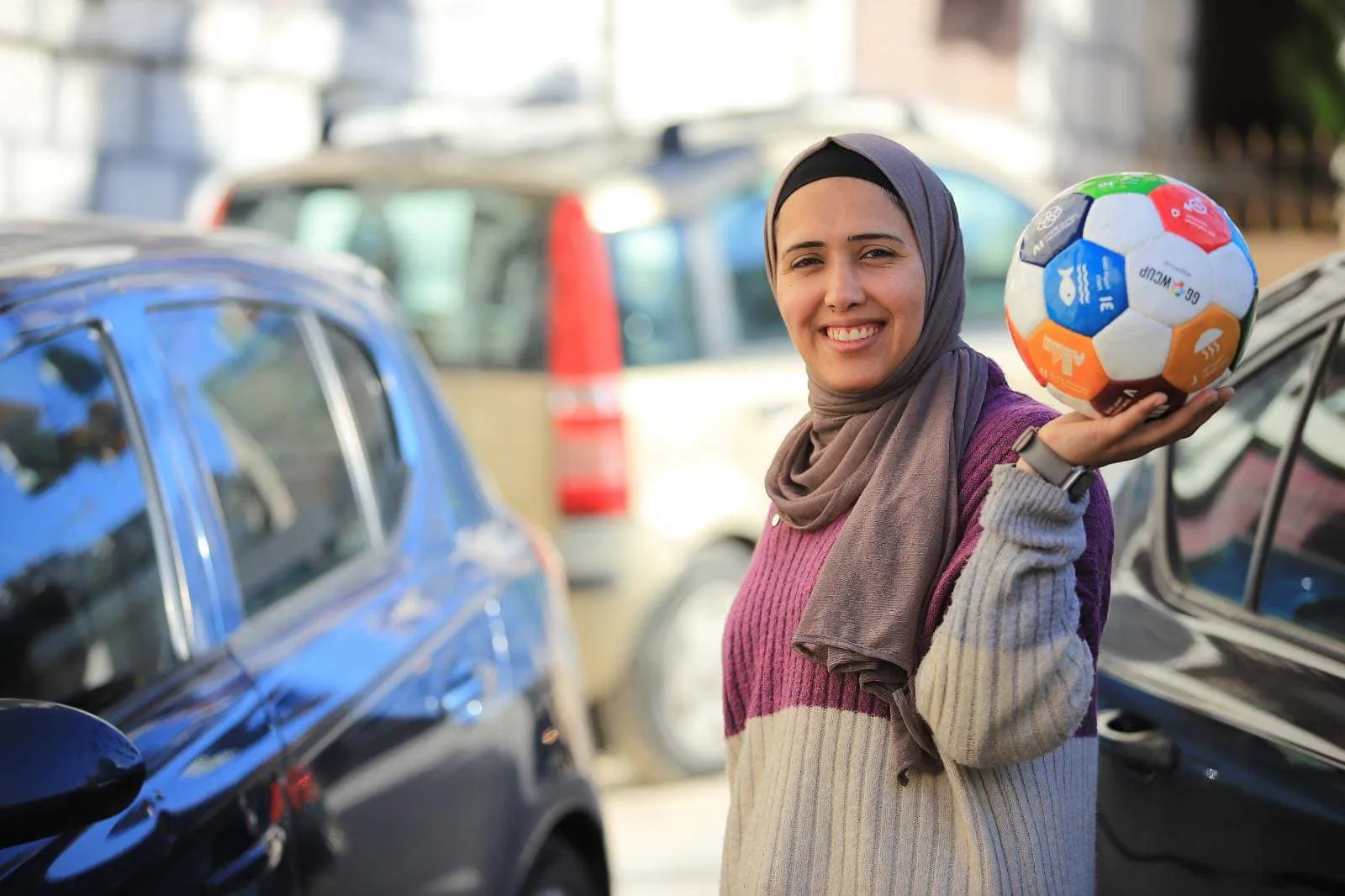
Beyond the classroom, I engage in academic research inspired by the challenges and experiences of teaching in Palestine. For instance, I observed that students who play video games tend to acquire a wide range of English vocabulary. This observation led me to explore the impact of Massively Multiplayer Online Role-Playing Games (MMORPGs) on language learning, and my research on this topic has gained recognition for its innovative approach to enhancing English proficiency in digitally connected environments.
I’ve often heard people say that teachers in difficult financial and political conditions, especially in the public sector, can’t make a real difference. But I refused to believe that. Instead, I held onto my passion for education and looked for ways to innovate.
This mindset led me to break barriers, becoming the first Palestinian teacher to volunteer in Thailand and collaborate with educators from Slovakia to Peru. I also found new ways to amplify my students’ voices, using mobile journalism to showcase their talents and share their stories with the world.
For years, I dedicated myself to promoting global citizenship, striving to bring international perspectives into my classroom and create meaningful opportunities for my students. My efforts to connect them with the world and foster a broader understanding of education were driven by passion and persistence.The breakthrough moment came in 2023 when my peers recognized my efforts and elected me as the Minister of Higher Education and Scientific Affairs for Youth. This role gave me a larger platform to advocate for meaningful educational reforms, particularly for underprivileged students. Many of them—especially those from Bedouin and refugee backgrounds—face daily struggles, from closed checkpoints to disrupted family lives. Yet, their determination reminds me why I remain committed to ensuring quality education for all, no matter the obstacles.
As the sun slowly sets, filling the sky with shades, I sit for a moment, taking a deep breath after a long day of teaching. The sounds of my city fades into the background, and with my hands wrapped around the last sip of coffee, I let my mind wander—back to the lessons, the challenges, the small achievements.
In a world where flexibility, adaptation, and innovation are not just beneficial but necessary, my experiences as a Palestinian educator shape and inspire my teaching both at home and abroad. Every challenge I face, every adjustment I make, is more than just a lesson—it’s a step toward building global citizens, young minds ready to navigate and contribute to an ever-changing world. And as I watch the last light fade behind the hills, I hold onto something stronger than exhaustion—hope. Hope that tomorrow, like today, will bring new possibilities.