
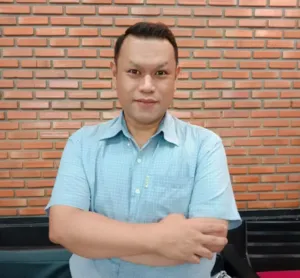
As an educator from Thailand, Supak has spent 24 years inspiring students through English language education and an innovative approach to learning. Teaching in a region rich in cultural diversity, Supak embraces both traditional and modern challenges, from the integration of technology in the classroom to fostering global citizenship. In this interview, Supak shares how active learning strategies and the UN Sustainable Development Goals (SDGs) have empowered students to engage with critical issues such as climate change, while also developing essential communication skills. Through competitions and creative projects, Supak has nurtured a supportive environment where students thrive and grow into confident, engaged global citizens.
Supak actively participated in the 2022-23 AFS Effect+ for the Classroom program, where he shared numerous global citizenship activities that he conducts with his students. We recently caught up with him to see how he’s doing and to learn more about his experiences.
What brought you to the teaching profession?
Supak: I started my teaching with the love of learning and doing activities. In Thailand, teachers can do anything in the schools, such as teaching, cooking food for children, decorating classrooms, singing or entertaining in the camp, ect., because of the curriculum, policies, and teacher tasks. I thought at first this job was fun and lively. Then I found that there were many learning challenges for me to overcome. Anyway, teaching students makes me happy when I support and watch them grow, develop, and succeed in many ways.
What are your students like?
Supak: Most of the students are the local northern people of Thailand. They speak dialects at home and school. However, they all understand Thai. Dialects are allowed to be spoken in the class, but we speak more central Thai because of the subject and the class management. Some of them are ethnic and minority groups, such as Karen and Tai Yai or Shan.
Can you tell us more about your school?
Supak: Sanpatong Wittayakom School is located in Sanpatong District, which is a suburb and rural area in Chiang Mai. It is a public government school under the Chiangmai Secondary Educational Service Area Office. There are 2,300 students from Mathayomsuksa 1-6 (Grades 7th-12th). The school serves students from 4 districts nearby: Sanpatong, Hangdong, Doilo and Bankad.
What is a challenge that you feel many teachers in your area have to face?
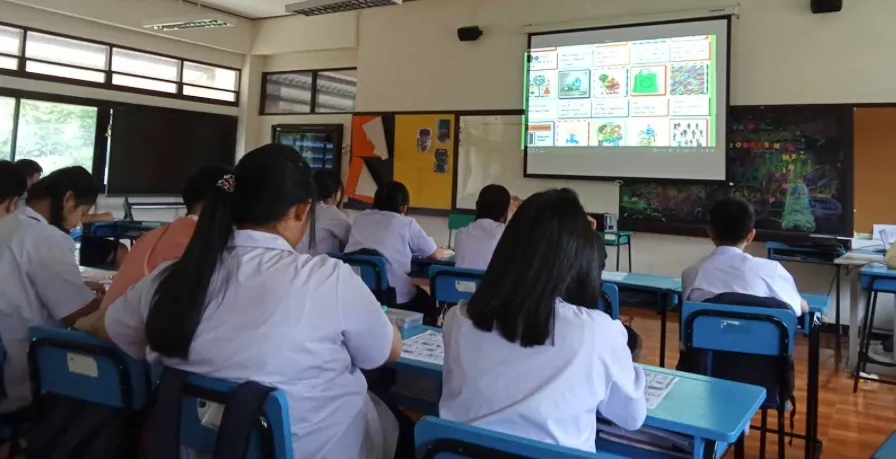
Supak: In my opinion, the big challenge for us as teachers is the rapid movement of technology and AI. I would say that young children and teenagers are the leaders; they can access and enjoy technology faster and deeper than we thought. Unfortunately, teachers are the followers; we are not born with technology and we try harder than students. Students feel free to use them without thinking and awareness. That’s why there are many problems that we are concerned about after that, such as bullying, being discriminated against, more aggressive or bad behavior, and learning loss. Technology is new and exciting, so the normal class is something boring to them. This is one of the challenges that teachers in my area need to solve by applying technology in their classes as much as possible to motivate students and use it as a tool to teach and learn.
Can you share with us a success story or moment that made you feel valued as an educator?
Supak: Personally, I like to chase a dream by joining a competition and of course I would like to win. As a teacher, I motivate and support my students to enter any competition they would like. For example, singing, dancing, storytelling, or even the beauty pageants. I take care of them and I am an advisor to the Cover Dance team at my school. I usually search for dance or other competitions in Chiang Mai for my students and I ask them to join. I teach them not to give up when they fail the competition. They need to try harder and go back to the next competition and then I will support them again. I mostly take care of transportation, costumes, food, applications, contacting parents, and asking the director to take students to the contest. The students take responsibility for practicing dancing together every day in front of the dance mirror. For the last 2 years, we’ve got the winner, the 1st, 3rd. 4th runner up, and the consolation prize from the Cover Dance competitions. This makes my heart sing happily and I feel valued as an educator and also a supporter.
How have you tried to incorporate Global Citizenship Education (GCED) into your classroom?
Supak: I have tried to incorporate GCED into my classrooms by using intercultural learning and the UN Sustainable Development Goals (SDGs). I apply the communicative English method 3Ps: Presentation, Practice, and Production in teaching English. So I add intercultural learning through activities in the practice or production stages. Think-pair-share, interaction with others, and team-building are usually brought to the class.
One example of my activities is setting the situation for students to interact with other diverse groups of students by asking questions and brainstorming. I chose the food topics and asked them to brainstorm the unusual food that we can eat. Then I compared food with my experience and other countries. They learned that we have a culture of food. We found the same food but different recipes and cooking styles. The objective of this activity is to practice English and critical thinking and also enhance students’ understanding and acceptance of their classmates.
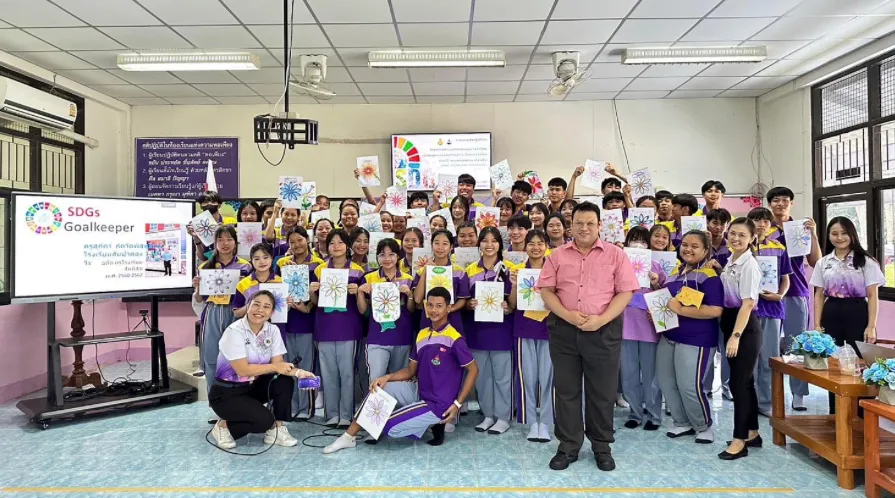
The SDGs are my favorite option in teaching English. It began on a hot day in May last year. My students felt so hot from the smoke, and they needed air-conditioning in the classroom. At that time we faced the smoke crisis in Chiang Mai. I told them that if we put the air conditioners in every classroom, it would be hotter outside. Then, 10 years later, it will become worse than today. So let’s find something to stop this issue now. And I introduced SDGs to the class. We did small projects to save electrical energy and take care of the rubbish and plants. This year, I finished the SDGs training course in the New Gen English and Tech Leadership camp in August. The camp is designed for students to practice English by using technology and learning SDGs. There were students from other schools to join the camp. Now I have the SDGs project work competition for students to create innovations to make their lives better in the future and according to the 17 goals of the SDGs.
How have your students responded to this kind of learning?
Supak: They enjoy learning with GCED because this is close and related to their lives. They can search the internet for more information and knowledge. If they have any questions, they can ask me and I sometimes answer or other times I ask my co-teacher to answer using different points of view. Then we can share with students’ ideas and opinions. It makes the student aware of anything in their lives such as a minority group movement, climate change, pollution, etc. that comes into their mind.
What is one teaching tool or method you find very effective that you would recommend to other teachers?
Supak: I would recommend active learning strategies such as games and competitive activities for students. Finding the suitable teaching approach, methods and activities should depend on the school context, students’ background, teachers’ abilities, and so on. On the other hand, lesson planning should be practical and easy for other teachers to use.
If you could give one piece of advice to a new teacher starting their career next school year, what would you say?
Supak: In Thailand, we say “Kroo” for teachers. This word originates from the words “Kru” and “Kuru” in Pali and Sanskrit languages in India. It means heavy. So “Teacher” by itself is the hard work for us to do. Be yourself, love to learn and share, and do more than teach.
Thank you to Supak for his time in sharing a little about himself with the AFS Audience! If you would like to connect further with Supak he has provided the following channels: Email, School Facebook Page, School Dance Group Facebook Page
Find out more by subscribing to the AFS Global Classroom Newsletter. Sign up now