
Richard Wonnsibe Tiimob’s journey into education began in Bunkpurugu, Ghana, driven by a desire to turn the challenges of his childhood into opportunities for the next generation. His story is one of unwavering dedication—from organizing peer study sessions as a student to being named Ghana’s Most Outstanding Teacher in 2025—transforming resource-constrained classrooms into hubs of global innovation.
Richard is a 2024 alumnus of the AFS Global STEM Educators program. We are proud of his work bridging local community action with global citizenship to mentor the next generation of changemakers.
Continue reading to discover Richard’s story.
My journey into teaching began in the small town of Bunkpurugu in the Northeast Region of Ghana. Growing up, I witnessed firsthand the challenges many children faced in accessing quality education. At the time, teacher-centered approaches were largely used, focusing heavily on rote academic activities, often at the expense of the holistic development of learners. Resources were scarce and opportunities felt limited.
Yet, those early experiences planted a powerful seed in me: the desire to become part of the solution. Even as a young student, I found myself helping classmates understand lessons they struggled with. I organized small peer study sessions after school, and in those moments, I realized how fulfilling it was to help others learn. That was when I first sensed that teaching might not just be a career for me, but a calling.
Studying science alongside community health helped me understand how education connects to real-life challenges such as public health, sanitation, environmental sustainability, and community development.
These experiences shaped my belief that education should not only transfer knowledge but also empower students to solve real problems in their communities.
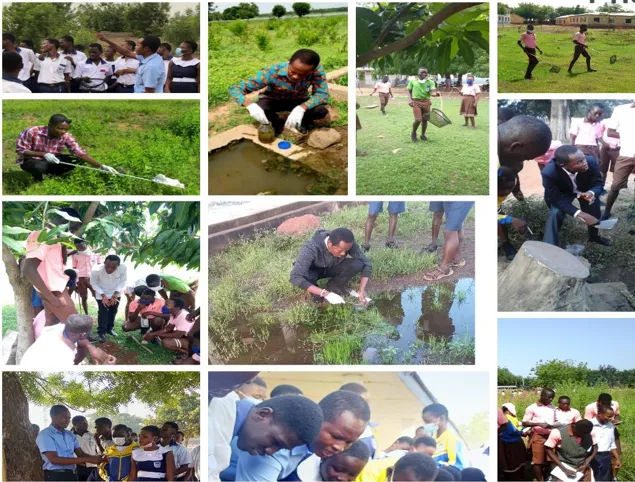
Teaching and leading in Northern Ghana
In 2004, during my teaching practice at Pong Tamale Municipal Assembly Junior High School, I met learners who perceived science as a difficult subject and therefore showed little interest in studying it. To address this challenge, I introduced learner-centered and experiential teaching strategies, including practical activities and field trips. These approaches gradually sparked students’ curiosity and interest in science. Over time, this intervention made a significant impact not only in the school but also in the community. Today, the school has produced its first medical doctor, and many of its former students are serving in various capacities contributing to national development.
Currently, at Savelugu Senior High School in Northern Ghana, I wear many hats. Beyond Biology lessons, I mentor students and teachers, supervise academic and extracurricular activities, support research projects, attend departmental meetings, participate in professional learning and school improvement committee meetings, assign classes, allocate teaching and learning resources to teachers and more.
Teaching in a resource-constrained environment can be demanding. Large class sizes, limited teaching materials, and sanitation challenges are realities we navigate daily. Yet, these challenges have pushed me to become more creative and resilient as an educator.
For instance, when teaching materials are scarce, students and I improvise by creating learning aids from locally available resources. Classroom walls become “Talking Walls,” filled with diagrams and student-created learning materials, and the local environment becomes our laboratory.
Climate Action and Global Connection
To address environmental concerns within the school and community, I founded the Climate Action Club and the War Against Waste initiative at Savelugu SHS. Here, students don’t just read about ecology; they practice it by recycling, upcycling, and managing plastic waste while developing a sense of responsibility for protecting their environment.
This local work found a global echo through my participation in the AFS Global STEM Educators Program. AFS shifted my perspective, showing me that a classroom in Northern Ghana is an integral part of a global network. Through partnerships like the Fulbright Teachers for Global Classrooms and AFS, my students have engaged with peers worldwide. Over the past three years, these collaborations have mentored over 10,000 students in leadership, growth mindset, and cross-cultural communication.
A Philosophy of Potential
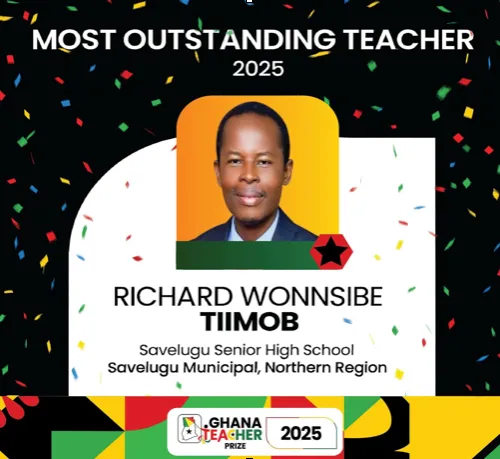
Being named Ghanaian Teacher of the Year in 2025 was a deeply humbling experience. The recognition represented more than my individual efforts; it reflected the collective support of my students, colleagues, and community. The award acknowledged not only classroom teaching but also innovation, mentorship, research engagement, and community impact. It reaffirmed my belief that impactful teaching is not determined by location or resources, but by dedication, vision, and collaboration.
My philosophy is simple: every learner has unique potential. My goal is to nurture “21st-century skills”—digital literacy, ethical citizenship, and critical thinking—to prepare them for life, not just examinations.
What motivates me today is the same thing that motivated me in Bunkpurugu: transformation. Seeing a student move from self-doubt to confident leadership is the greatest reward. After two decades, I remain a lifelong learner, growing alongside my students and striving to ensure they believe their dreams are possible.
Interested readers can connect with Richard on LinkedIn or via email at [email protected].