
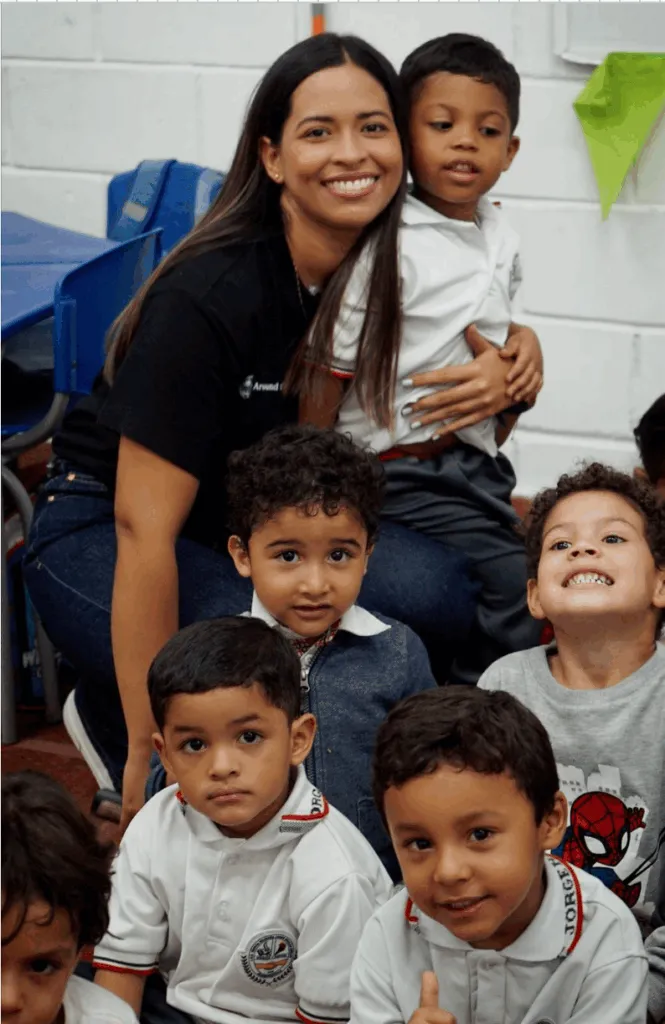
How do you teach global citizenship to a preschooler? For Betsy Caballero Salas, it starts with a song, a story, and a lot of structured play. Betsy shares how she bridges the gap between ambitious goals and classroom realities through creativity and resilience and why she believes intentional empathy is the most important tool an educator can carry. Betsy participated in the AFS Youth Assembly Educators Workshop, a special scholarship-driven program that empowers young educators from around the world to bring active global citizenship into their classrooms.
‘Having been shaped by public education through effort and perseverance from school to university I deeply believe in its power to transform lives. From my classroom in Colombia, I see every day how education can open doors and shape futures. Every child is a possibility, and every teacher, a force for change.’
AFS: Can you please introduce yourself to our audience?
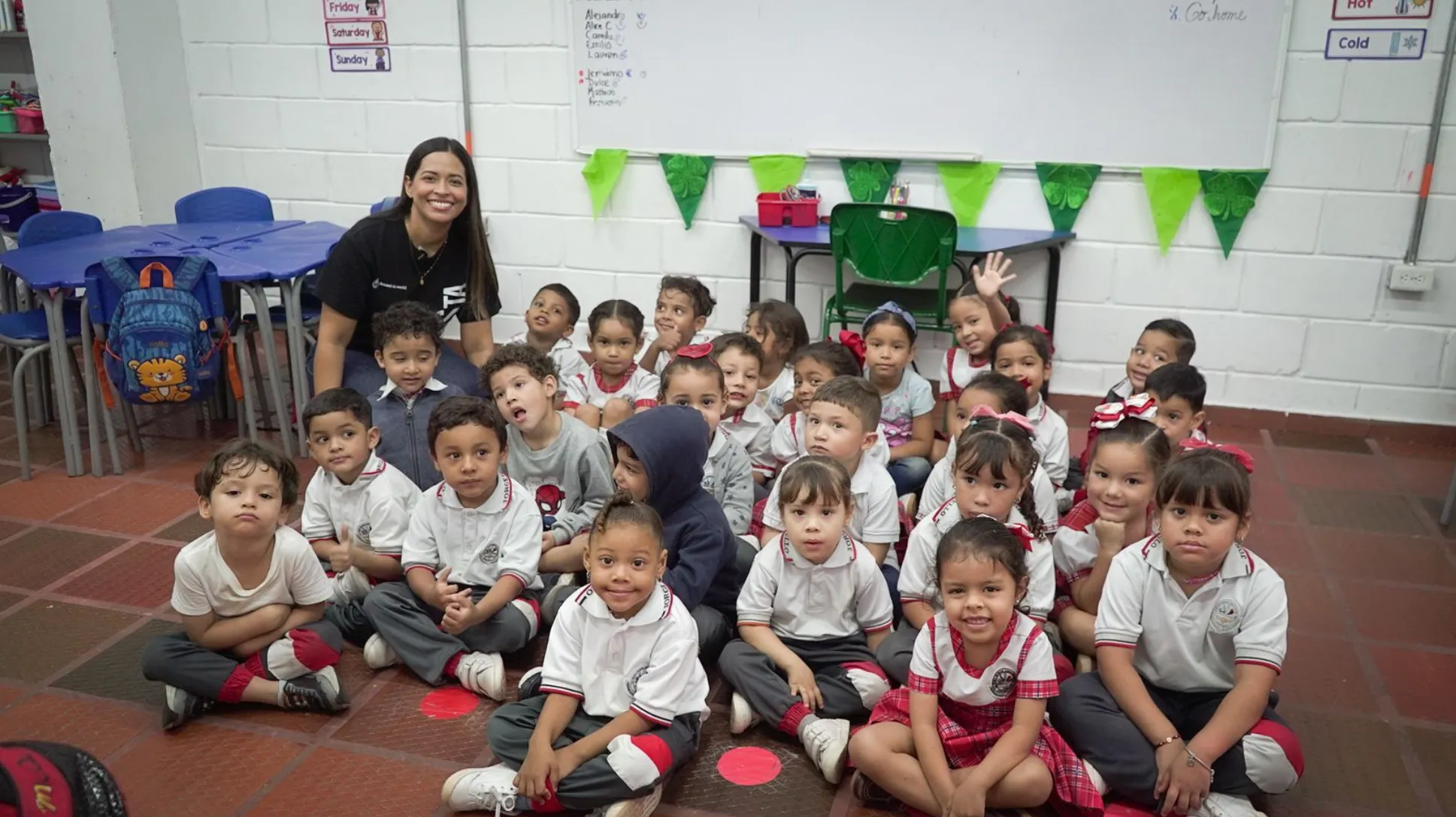
Betsy: My name is Betsy Karina Caballero Salas, I am 26 years old, and I am an early childhood educator in Barranquilla, Colombia. I teach preschool students in a public school recognized as one of the first national bilingual public schools in the country. In my classroom, I focus on early literacy, mathematics, and English as a foreign language. I also try to create meaningful learning experiences where children begin to see themselves as capable, curious, and connected to a wider world.
My journey into education has been guided by a strong sense of purpose: the belief that teaching can transform lives from the beginning. Working with early years has shown me that education is not only about academic development, but about building confidence, identity, and emotional security. Over the years, I have learned that being a teacher means being intentional, empathetic, and deeply committed to each child’s reality and potential.
AFS: Can you tell us more about your students and your school?
Betsy: My students are energetic, expressive, and full of curiosity about the world around them. All of them are Spanish speakers who are beginning their journey in learning English, which makes the classroom a vibrant space of discovery and growth. They come from diverse socio-economic backgrounds, and while many face challenges beyond the classroom, they bring resilience, creativity, and joy into every learning experience. Teaching them constantly reminds me that every child carries a unique story that deserves to be understood and supported.
I work in a public school that represents both excellence and contrast. I am part of ‘Institución Educativa Distrital Técnica Bilingue Jorge Nicolás Abello’ in Barranquilla, a school that serves more than 1,000 students and offers education from preschool, primary and high school. It is recognized as one of the first national bilingual public schools in Colombia. In addition to its bilingual focus, it also offers technical education, which represents a double challenge for both students and teachers. It stands as a space of opportunity and innovation for many families. At the same time, it continues to face the structural limitations common to public education, including resources and infrastructural challenges. This dual reality shapes our daily work: we are called to deliver high quality education while navigating limitations. In this context, teaching becomes an act of creativity, resilience and deep commitment.
AFS: What is a challenge that you feel many teachers in your area have to face?
Betsy: A significant challenge for many teachers in my context is bridging the gap between ambitious educational goals and the realities of limited resources. Educators are expected to provide high quality, including bilingual education while also responding to the diverse academic and emotional needs of their students. This requires constant adaptation, innovation, and emotional investment. Teaching, in this sense, goes far beyond instruction, it becomes a continuous effort to support students with dedication and passion.
AFS: Can you share with us a success story or moment that made you feel valued as an educator?
Betsy: One of the experiences that has made me feel most valued as an educator is the opportunity to take on leadership roles from an early stage in my career. I have been actively involved in institutional processes, contributing ideas and supporting initiatives within my school community. Recently, after my participation in the Youth Assembly 2025, I was chosen by the school directors to lead the bilingualism process in preschool and primary our community. This role has been especially meaningful because it allows me to not only impact my own classroom, but also contribute to a broader educational vision. It reaffirmed my belief that teachers can be leaders, innovators, and agents of change within their communities.
AFS: How have you tried to incorporate Global Citizenship Education (GCED) into your classroom?
Betsy: In my classroom, Global Citizenship Education begins with everyday interactions. I intentionally create spaces where values such as empathy, respect, and cultural awareness are part of the learning experience. Through stories, songs, and collaborative activities, I introduce children to the idea that they are part of a diverse and interconnected world. I also integrate social-emotional learning by helping them recognize their feelings, respect differences, and build positive relationships. These small, consistent actions lay the foundation for a more inclusive and global perspective.
My students respond with curiosity, and enthusiasm. They engage deeply with activities that allow them to explore emotions, interact with others, and express themselves creatively. Over time, I have observed meaningful growth in their ability to communicate, cooperate, and show empathy to their peers. These responses demonstrate that even at an early age, children are capable of understanding the values of global citizenship.
AFS: What is one teaching tool or method you find very effective that you would recommend to other teachers?
Betsy: One of the most powerful methods I use is play-based learning. In early childhood education, play is not separate from learning, it is the way learning happens. Through intentional and structured play experiences, children develop cognitive, social, and emotional skills in a natural and engaging way. This approach promotes curiosity, creativity, and a genuine love for learning, which are essential for long term educational development.
AFS: If you could give one piece of advice to a new teacher starting their career next school year, what would you say?
Betsy: I would tell them to remember that teaching is, above all, a human profession. Beyond lesson plans and objectives, what truly matters is the connection you build with your students. Be patient with the process, stay open to learning, and trust that even the smallest actions can have a strong impact. Teaching is not about having all the answers, it is about showing up with purpose, empathy, and the willingness to make a difference every day.
You can contact Betsy Caballero Salas on LinkedIn or via email: [email protected]