
What makes a teacher stay passionate after nearly three decades? José Antonio Alcalde López, an educator who participated in the AFS Effect+ for the Classroom program, reflects on the “glittering moments” that sustain an educator’s career and why he believes the human factor is the most important tool in any classroom. Discover his “5-minute lesson openers” and how he prepares his students in Granada, Spain, for a connected (and often complicated) world.
AFS: Please introduce yourself to our readers.
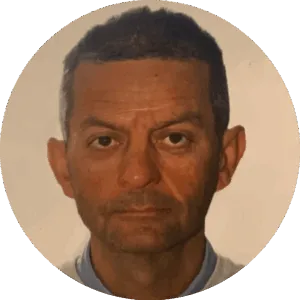
José Antonio: I teach in a state secondary school named Pedro Soto de Rojas which is located in Granada, a city in the south of Spain. I can teach English to 7th-12th grade students but in the last years I tend to teach more the higher grades (11th and 12th). In Spain, secondary school teachers are usually specialized in just one subject although we can teach other related subjects.
This is my 28th year as a teacher and I have worked in 7 different schools. I guess that, like many other teachers around the world, I became a teacher because of another teacher. This American woman saw something in me and I still today remember clearly her words: “You could be a teacher, have you thought about that?”. So, I changed direction and moved from computing into languages and more specifically language teaching. To be honest, I had always liked helping other people, learning English, and traveling.
AFS: Can you tell us about your students and school?
José Antonio: Along my teaching career I have taught in different schools and environments and each one has been somehow different from each other. I have been teaching in rural areas where foreign languages weren’t a priority. I have been part of schools with a high percentage of immigrant students coming from South American, Eastern Europe and Northern Africa whose parents were working in the farms and fields in the school catchment area.
Nowadays I work in a school with a pretty standard type of students for Spain. Most of them come from middle-class families for whom education is important and have high expectations to go to university. We do have students from other countries like Morocco, Venezuela or Colombia, ethnicities other than Spanish, languages apart from Spanish (Polish, Arabic or French) or religions other than Christianity (the predominant one in Spain) like Islamic or Jehovah’s Witnesses, but they are a minority.
Our school is a public school built originally in 2002 for around 600 students although today it hosts around 900 with 90 teachers. It is a modern building with technological equipment that we foreign language teachers really appreciate. In Spain secondary school begins at 7th grade with four years of Compulsory Secondary Education. After that, at 16, students usually have two options: either they go along a more academically-oriented path called “Bachillerato”, which mainly gives access to university, or they can choose a course to learn a job called “Ciclos Formativos”. Our school offers Bachillerato (in the modalities of human and social sciences and STEM) and Ciclos Formativos which prepare students to deal with disabled people, home care, and so on.
Our school is also known for a special program that enables students to be in mainstream secondary education and simultaneously in official music and dance school. Usually, they are a world apart and very demanding for students so this program is a plus for many families interested in both.
AFS: What is a challenge that you feel many teachers in your area have to face?
José Antonio: Over here, more experienced (and older) teachers usually look for positions in nice schools in cities. In Spain teachers can get better or more appealing positions after years of experience and further qualifications. My school is one of those “attractive” ones and I feel that the average age is quite high. I feel that trying to explore new methodologies or launching new programs is not easy because our teaching staff is thinking more about retirement than novelties or improvements.
AFS: Can you share with us a success story or moment that made you feel valued as an educator?
José Antonio: A colleague of mine said once that we teachers take a long time to see our “products” if ever. Students come and go but we are always there welcoming new ones. For this reason, I would say it is more like little moments rather than a success story that come to my mind when I think of the bright side of teaching.
I have something called “No-book Day”. Out of the 4 lessons a week we have for English at secondary level, I devote one to do something different and away from the “tyranny” of the official coursebook, traditional grammar notes, endless vocabulary listings and so on. I design, find or create something new, appealing or meaningful to my students. Well, one day while I was getting everything ready to start the lesson, one girl was talking to another student and she said: “I can’t wait to see what the teacher has prepared for today’s lesson. Every week is different and so cool!”. I pretended not to have heard it but I must say I felt pretty flattered.
AFS: How have you tried to incorporate Global Citizenship Education (GCED) into your classroom?
José Antonio: Last year after taking the Effect+ for the Classroom with AFS (a truly eye-opener in my career), I knew I had to make the most of it. It is true that teaching a global language like English means we usually tackle international issues almost on a daily basis but, now I can see beyond this.
These days my approach is more comprehensive and thoughtful. I try hard to find topics and contents reflecting UN SDGs like migrations, fair trade, minorities, global economy, current issues, environment and so on. I usually keep an eye on international events and try to bring all that into the classroom. I want my students to feel themselves part of a connected world with benefits and shortcomings.
I must say that many of my students are glad we tackle issues like those . They feel our “school” is closer to the real world they see outside, news they have heard, and stories they have read or seen somewhere. Now they feel they can relate more. I believe that, on many occasions, English coursebooks are very general and aseptic so they can fit varied audiences in different countries. This is so especially in books addressed to teens since they try to avoid some controversial issues focusing on more “neutral” or harmless content. I think this is a mistake, schools should not be away from society but part of it.
AFS: What is one teaching tool or method you find very effective that you would recommend to other teachers?
José Antonio: Teaching is quite personal and it is really difficult to find methods or techniques that suit all of us. Along the years we teachers see, try, adjust, implement, or create different things in order to reach as many students as possible or to make learning more effective.
One thing I do daily as a lesson opener comes from a book full of curiosities about different countries worldwide. At the beginning of each lesson, I start by saying “Today we visit…”, and I tell my students about one country, meanwhile they listen to me (taking notes or not depending on their memory), and, finally, I ask in Spanish for a summary of the information. Over time I came up with “Today in history” (including facts and events that happened on specific days along the year), and “Weird but true” (with shocking or hard to believe facts). It takes just 4 or 5 minutes but it is highly effective as I get my students’ attention, we talk about varied topics in class, sometimes a small debate can follow up, and so on.
AFS: If you could give one piece of advice to a new teacher starting their career next school year, what would you say?
José Antonio: As I see it, a true teacher is always a learner. This is why my first piece of advice is to learn with your students. Learning is a kind of teamwork and all of us must pull our part. My second piece of advice is to remind new teachers that students are above all people, and then students. Hence, the human factor is key for all teachers. And last but not least, like my grandfather used to say, whatever you do, try to give your best. Students are young but not silly and they know for sure who is putting some effort into it.